Redesigned schema management within SAS Intelligent Decisioning to help users define, inspect, and apply complex data structures more intuitively.
The work focused on making hierarchical schema more legible, reducing cognitive load, and integrating schema directly into decision workflows — turning a foundational but opaque layer into a usable part of the decisioning experience.
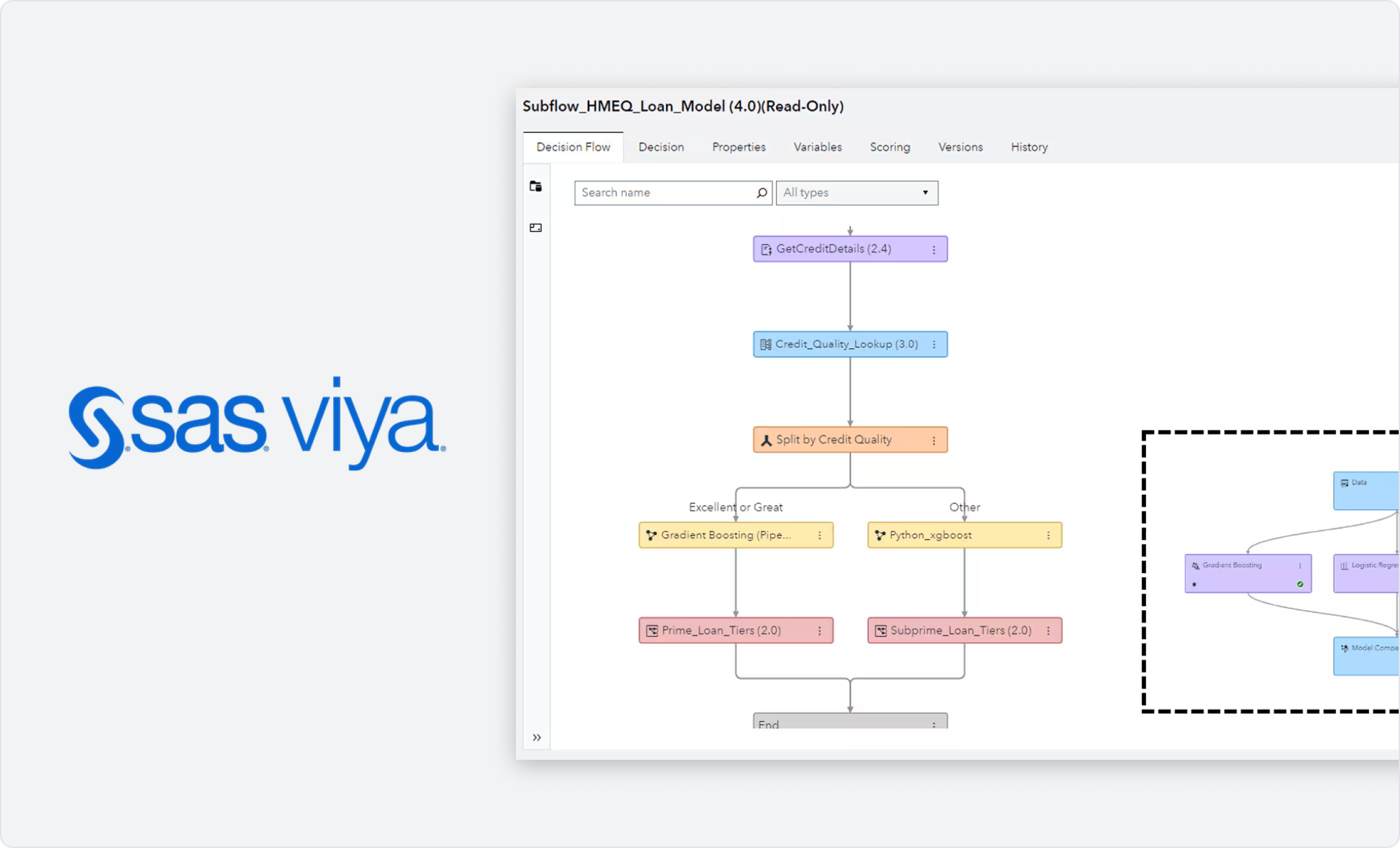
Protected Under NDA
The full case study contains confidential product details and is available with a password. Please reach out if you'd like access.
The hidden complexity of schema
Schema management is foundational to decisioning systems. Every rule, variable, and model depends on structured data flowing through the platform.
But as schemas grow, the experience of working with them becomes increasingly opaque. Users aren't blocked by missing features — they're blocked by the gap between what the data is and how the product presents it.
- 01 Deeply nested structures are hard to interpret at a glance, forcing users to mentally reconstruct what the data looks like.
- 02 Translation happens in the user's head — schema has to be re-expressed as decision logic line by line.
- 03 The workflow is disconnected from the authoring surface, pulling users out of flow every time they need structure.
From data structure to user experience
Rather than simplifying schema itself, the design challenge was to make complexity understandable, navigable, and usable in context. Three principles shaped every decision.
Make structure visible
Surface hierarchy where users need it, without requiring them to reconstruct it mentally. Legibility of the data is the first layer of usability.
Keep users in flow
Schema inspection shouldn't break the authoring experience. Bring the reference to the user, rather than sending the user to the reference.
Bridge data to action
Close the gap between seeing a schema attribute and applying it. Every step from structure to logic should feel like one continuous motion.
Making schema usable
Transforming complex schema structures into a more understandable, navigable, and actionable experience inside Intelligent Decisioning.
-
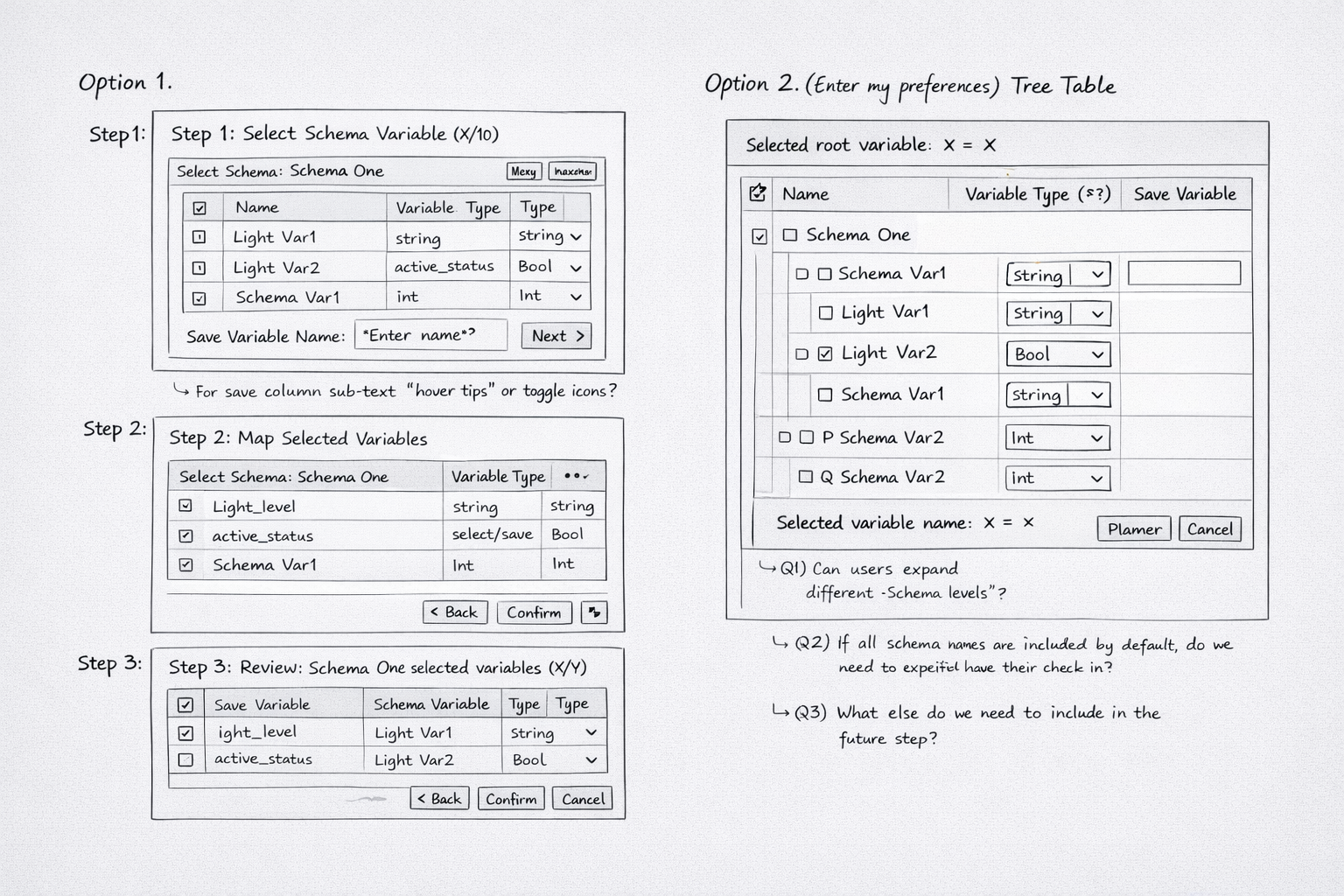
01Paper PrototypeBefore moving into high-fidelity design, we explored schema interactions through low-fidelity prototypes. This helped validate mental models early and iterate quickly without technical constraints.
-
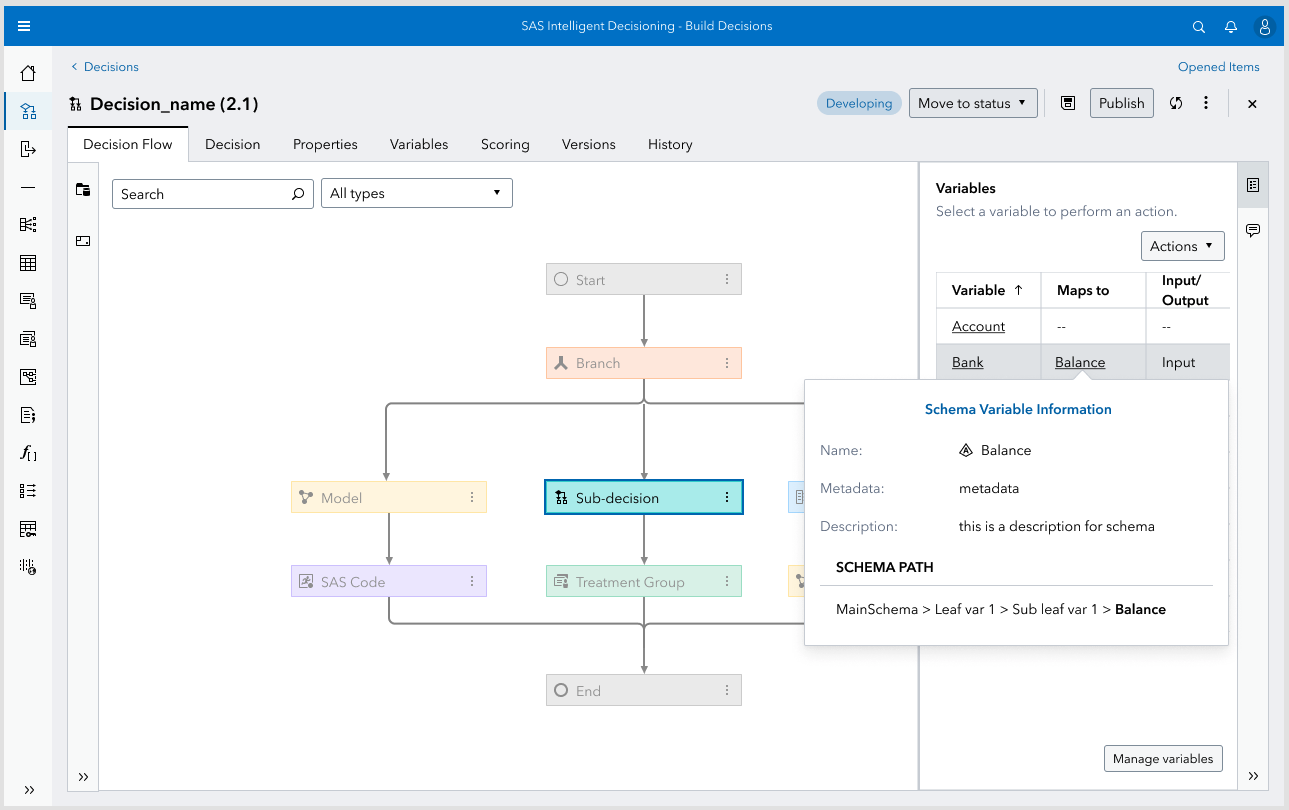
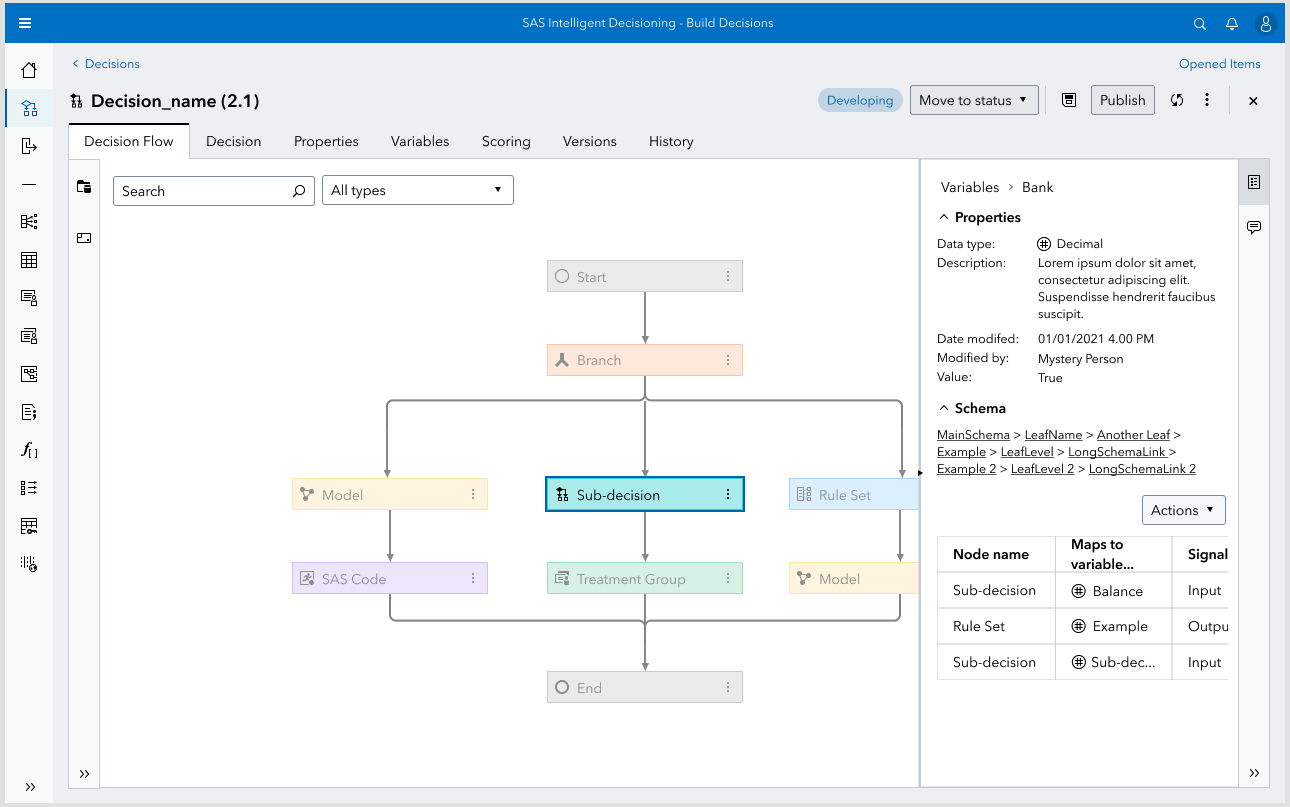
02Schema Path Pop-overReveal schema hierarchy in context, allowing users to understand nested structures without leaving their workflow.
-
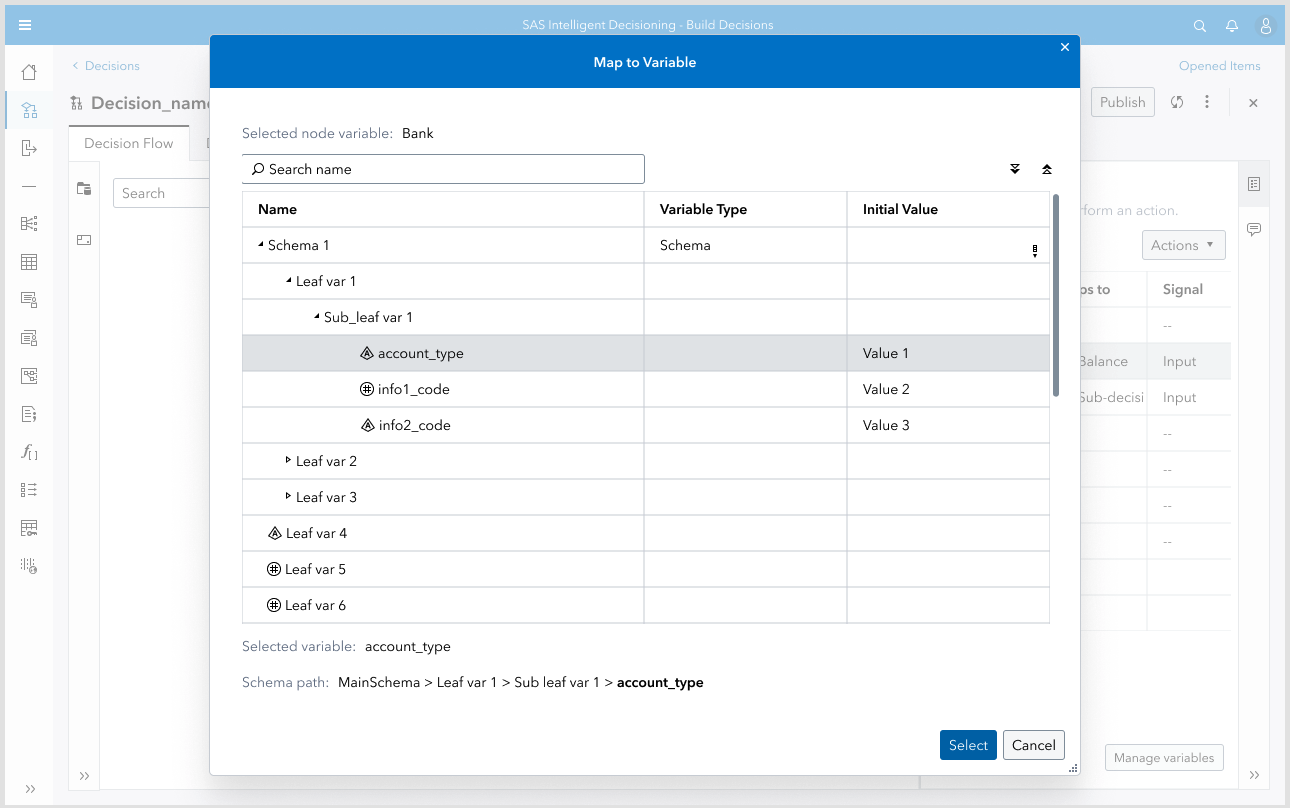
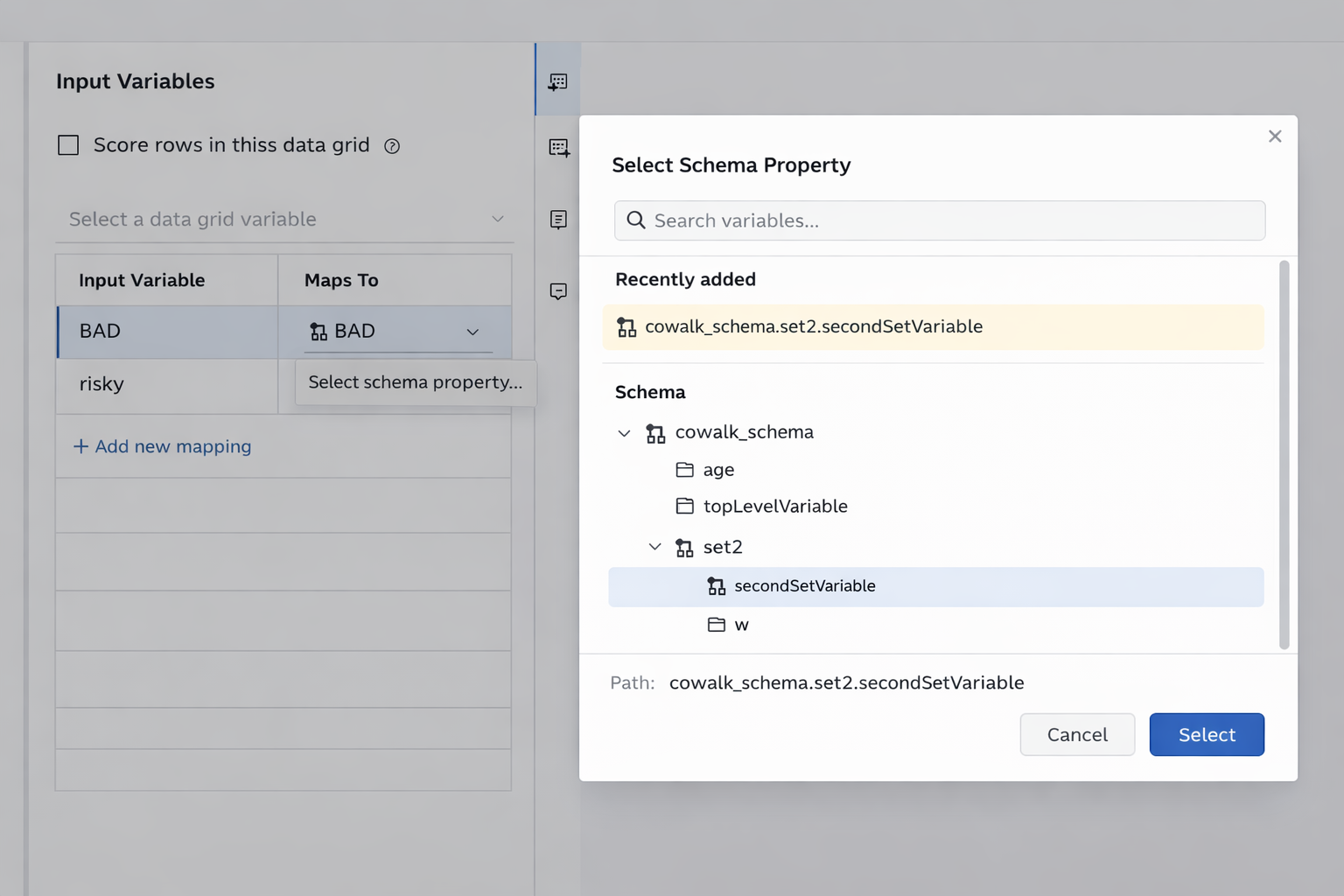
03Mapping to VariablesBridge schema attributes directly to decision variables, reducing manual effort and cognitive translation.
-
04Drill-in Schema ViewA focused, layered view for inspecting schema details, types, and relationships at depth.
-
05Schema Selection DialogImprove discoverability and scalability when navigating a growing library of schemas.
Paper prototype
Schema path pop-over
Mapping to variables
Drill-in schema view
Schema selection dialog
From structure to intelligence
Transforming complex data structures into usable decision intelligence — at enterprise scale.
This work helped strengthen the foundation of schema-driven decisioning — making structured data more accessible and actionable across the platform.
SAS® Intelligent Decisioning ↗Magic Quadrant™ for Decision Intelligence Platforms
SAS recognized as a Leader for completeness of vision and ability to execute in enterprise decisioning.
Designing for real systems
Three lessons from taking schema management from concept to shipped experience inside a complex enterprise platform.
Cross-functional collaboration
Worked closely with development, API, and runtime backend teams to ensure design feasibility and alignment with system architecture.
Feasibility shapes experience
The best solution is not only intuitive, but also buildable and scalable within real product constraints.
Prioritization creates momentum
Defining MVP versus post-MVP scope helped the team deliver meaningful value while preserving a longer-term vision.
What comes next
The current work lays the foundation for schema as a first-class object in the decisioning experience. Several directions extend that foundation.